01
What Is a Gartner Emerging Market Quadrant?
Gartner Emerging Market Quadrants assess providers in evolving technology markets. Understand the criteria, the difference from an MQ and how vendors should prepare.
Practical guidance on analyst engagement, buyer trust and commercial impact.
Ask Kea uses AI. Questions and follow-ups may be processed by OpenAI. Privacy details
Gartner Emerging Market Quadrants assess providers in evolving technology markets. Understand the criteria, the difference from an MQ and how vendors should prepare.
Understand CB Insights company profiles, Analyst Briefing submissions, market maps and annual lists, and how Kea helps vendors prepare credible evidence.
Understand Celent’s Technology Capabilities Matrix, XCelent Awards, VendorMatch and Model Awards, and how Kea helps vendors choose the right route.
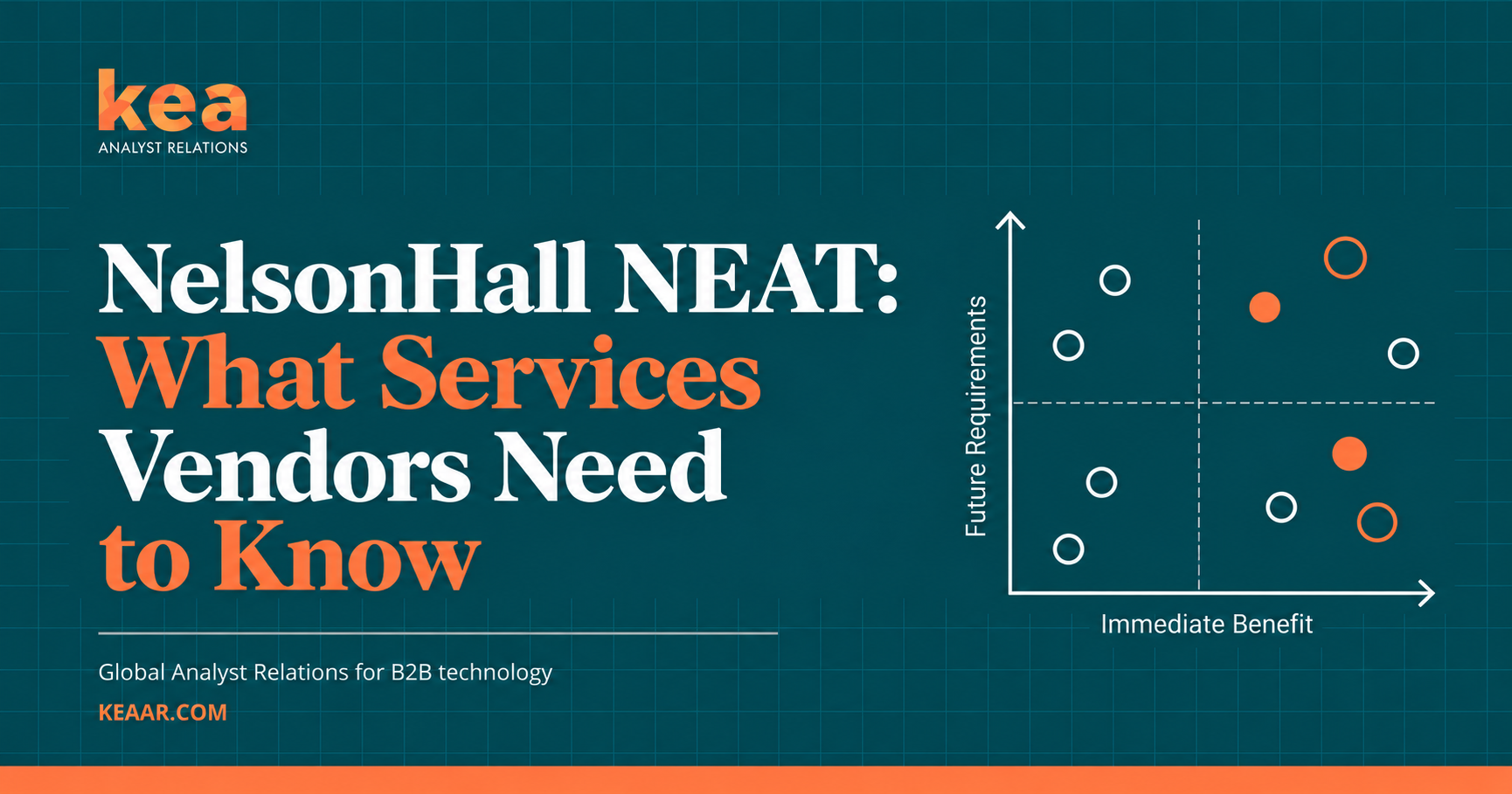
NelsonHall’s NEAT helps sourcing teams compare providers on immediate benefit and future needs. Here is how services vendors should understand the study and prepare.
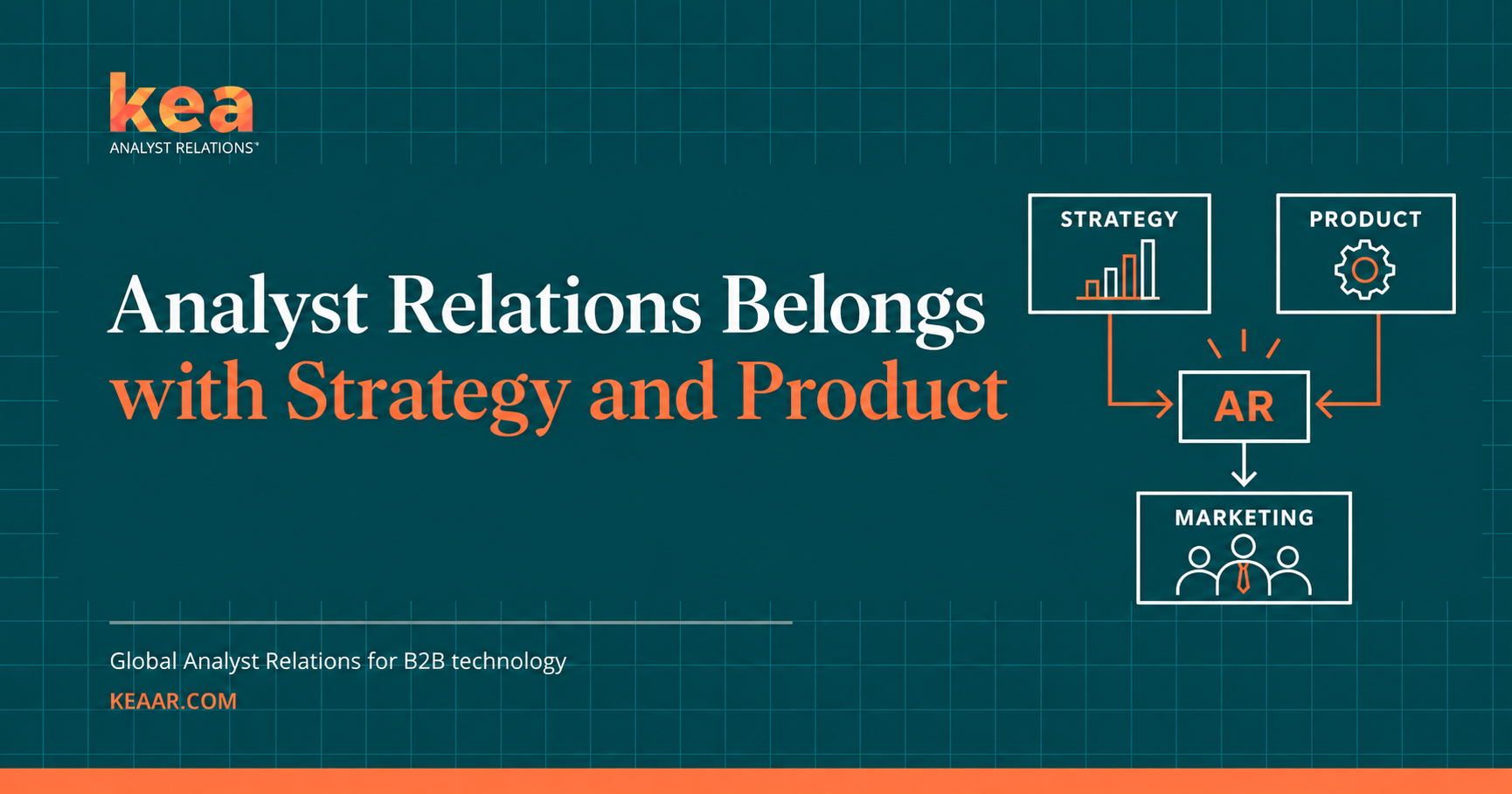
Put Analyst Relations with Strategy or Product. Give the programme clear decision owners, access to evidence and funding tied to business needs.
Build an analyst relations budget around services your team can use. Bring the proposal to Kea and establish the requirement before you commit.
Executives do not need a diary of analyst activity. They need to know what changed, what it means for the business, where support is required and whether the programme is moving its intended outcomes.
A briefing gives the analyst information. Paid advisory work gives your company access to the analyst's expertise. Know which problem you are solving before you buy the time.
A practical guide to analyst perception audits: test what relevant analysts understand, separate fact from inference and track whether market understanding is actually moving.
Enterprise buyers build trust before sales by combining analyst views, customer proof, peer reviews, consultant input, search results, AI summaries and internal conversations.
An Analyst Relations agency can provide strategy, analyst mapping, engagement, briefing preparation, evaluation support, research monitoring and measurement—but the useful distinction is whether it improves market understanding, not how many meetings it books.
Everest Group is more than its PEAK Matrix. Learn what the firm covers, how assessments work and when technology and services providers should engage.
Is your leadership ready for critical analyst feedback? A practical guide to weighing evidence, benchmarking competitors and turning uncomfortable insight into decisions.
Research and insight are stepping stones towards your business goals. A practical guide to choosing, using and renewing analyst subscriptions—and doing the work that turns knowledge into progress.
ISG Provider Lens is more than a provider quadrant. Learn how its sourcing-advisory context, regional research and evaluation process matter to vendors.
Analyst Relations is no longer only about briefing analysts or supporting evaluations. It has become an upstream market intelligence function with direct impact on positioning, product, sales and market perception.
Research inclusion can shape a buyer's shortlist before a reprint is licensed. Here's how to distinguish research visibility, paid campaigns and analyst advice.
An IDC MarketScape assesses vendors in a specific technology or services market. Here is how to understand its capabilities and strategies framework, read the findings and judge their relevance to your business.
A Forrester Wave compares selected providers in a defined market. Understanding its criteria, scores and customer feedback helps you see what the findings mean—and which questions still need answering.
What do the four quadrants actually mean, and what can a vendor’s position tell you? A straightforward introduction to the Gartner Magic Quadrant and how to read it in the context of your business.
Ask buyers where analyst advice influenced their decision. A practical way to build evidence of AR’s contribution through win–loss conversations.
Turn analyst research into a concise sales card that helps account teams answer buyer questions with relevant evidence and clear next steps.
Move beyond customer logos. Give analysts the deployment detail, business outcomes and context they need to assess your customer evidence.
Turn a briefing into clear actions, named owners and useful follow-up. A practical approach to keeping analyst engagement moving.
Nucleus Research looks beyond features to usability, functionality and ROI. Learn how its Technology Value Matrix and deployment evidence matter to vendors.
AI search is changing how enterprise buyers discover vendors. Bram Weerts explains why Analyst Relations, third-party proof and clear market language now decide whether AI systems understand you correctly.
Research processes are changing. Bram Weerts explains why analyst influence still matters when enterprise technology buyers need confidence and context.
For companies selling €500,000 enterprise deals, Analyst Relations is not an abstract marketing expense. It is a practical way to reduce revenue risk before an opportunity reaches sales.
Positioning is what a company wants the market to believe. Buyers act on the picture created when those claims meet customer evidence, independent opinion, analyst understanding and lived experience.
Why a focused analyst relations programme helps the right people understand your company before buyers ask them for advice.
AI can turn market reputation into a buyer’s first impression. Bram Weerts explains what CMOs should test, substantiate and keep current.
Relationship history, relevance and timing matter more than contact counts. How commercial leaders turn an existing network into useful conversations.
A sharper deck cannot fix an unclear market position. How B2B leaders connect their product story to the change buyers actually care about.
Buyers will simplify your company. Make sure the version they remember reflects your current capabilities, customers and market relevance.
A practical guide for sales and marketing: identify the research, reviews and AI answers shaping a buyer’s shortlist, then act on the evidence.
Practical guidance
Next step
Kea helps B2B technology companies build the relationships, evidence and market understanding required to change how they are seen.
Discuss Analyst Relations with Kea